What Mainstream Fashion Advice Says
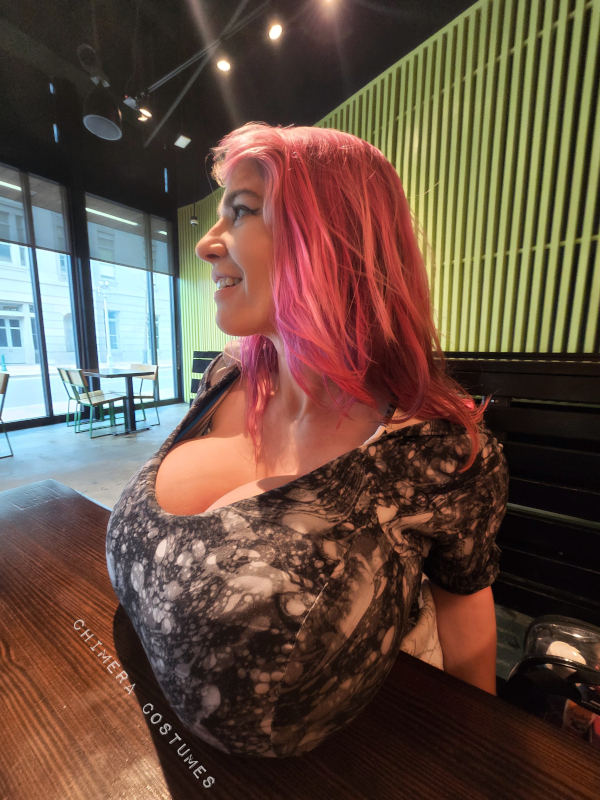
Open any mainstream fashion magazine or website and search for advice for full-busted figures. You'll find: choose darker colours on top, avoid horizontal stripes, wear V-necks to elongate, use a strong shoulder to "balance," avoid large prints that "overwhelm." Every single piece of advice is framed around minimisation — how to make your bust appear smaller, how to redirect attention, how to "balance" something that mainstream fashion treats as inherently imbalanced.
This advice is not neutral. It is built on the premise that a full bust is a problem requiring a solution, and that the solution is concealment. #Boobcore rejects this premise.
The #Boobcore Framework
The #boobcore approach asks different questions. Not "how do I minimise this?" but "how do I build something that fits and celebrates this?" Not "how do I redirect attention?" but "how do I structure a garment to support and showcase this silhouette?" These questions lead to different answers — and different garments.
Custom corsets. Properly drafted patterns. Bodices with internal structure. Fabrics chosen for how they behave on your specific body rather than for their supposed slimming properties. These are the solutions #boobcore offers in place of the mainstream advice.
Why Minimisation Culture is Harmful
Beyond the practical failures of minimisation advice — which often doesn't work anyway — the cultural message is damaging. Telling full-busted people that their figures are problems to solve contributes to shame and discomfort with bodies that are, objectively, not problematic. They're just bodies. The fashion industry's relationship with them is the problem, not the bodies themselves.
Frequently Asked Questions
The #boobcore community respects individual choice — the point is that minimisation should be a choice, not a mandate. If you prefer structured garments that don't emphasise the bust, that's valid. The problem is when minimisation is the only advice offered.